In the highly competitive world of customized electronics, the quality of your finished product is the ultimate differentiator. As consumers move away from simple stickers and flat-printed covers, the demand for “full-wrap” or 3D customization has reached an all-time high. To achieve this premium look—where the design flows seamlessly from the back of the phone to the very edges of the screen—standard printing methods are no longer sufficient.
This is where Sublimation Film comes into play. It has revolutionized the way we think about personalized manufacturing. This comprehensive guide will walk you through everything you need to know about this material, its application, and how it is reshaping the industry.
1. Understanding Sublimation Film For Phone Cases: The Science of Flexibility
At its most basic level, Sublimation Film for phone cases is a high-tech carrier medium engineered specifically for the precision demands of mobile accessory manufacturing. While traditional sublimation relies on rigid paper, this film is crafted from a specialized plastic polymer—typically a modified, high-elongation version of PET (Polyethylene Terephthalate).
What sets this film apart in the phone case industry is its dynamic physical response to heat. Standard smartphone cases feature complex geometries, including rounded “waterfall” edges, precise camera cutouts, and tight corners. Traditional paper remains rigid and would wrinkle or tear when forced around these curves. In contrast, sublimation film is designed to reach a “glass transition state” at specific temperatures.
In this state, the film becomes incredibly soft and elastic, behaving like a “second skin.” This allows it to be vacuum-molded around the phone case without tearing, ensuring the printed image wraps seamlessly from the back plate to the side bezels without any white gaps or distortion.
The film’s surface is treated with a sophisticated chemical coating designed to lock sublimation ink in place with high density. When the vacuum machine applies heat and pressure, the ink molecules transition into a gas and are driven deep into the pores of the sublimation-ready phone case blank. Because the film maintains constant contact with the case’s curved surface, the result is not a fragile surface print, but a high-definition design embedded within the case material itself, making it completely scratch-resistant and durable for daily use.
2. Professional Workflow: How to Use Sublimation Film
Using sublimation film is a precise technical process that requires a harmony between temperature, time, and pressure. Here is the step-by-step professional workflow used by leading manufacturers like Prosub.
Step 1: The Printing Phase
The process begins with a standard inkjet printer equipped with high-quality sublimation inks. The design is printed onto the matte, coated side of the film. It is vital to print in mirror image, as the film will be flipped over during the transfer. Because film does not absorb moisture the same way paper does, it often requires a moment to dry, or the use of specialized “fast-dry” films like those developed by Advansub.

Step 2: Tooling and Jigs
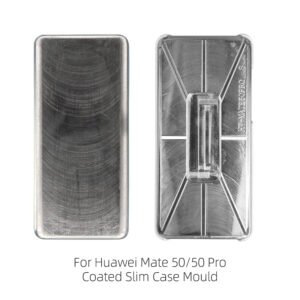
You cannot sublimate a 3D phone case without a jig (a metal or heat-resistant plastic mold). Because the sublimation process involves high heat (approx. 180°C) and heavy vacuum pressure, an unsupported plastic phone case would melt or collapse instantly. The jig is inserted into the case to maintain its exact dimensions and shape throughout the heating cycle.
Step 3: The Vacuum Cycle
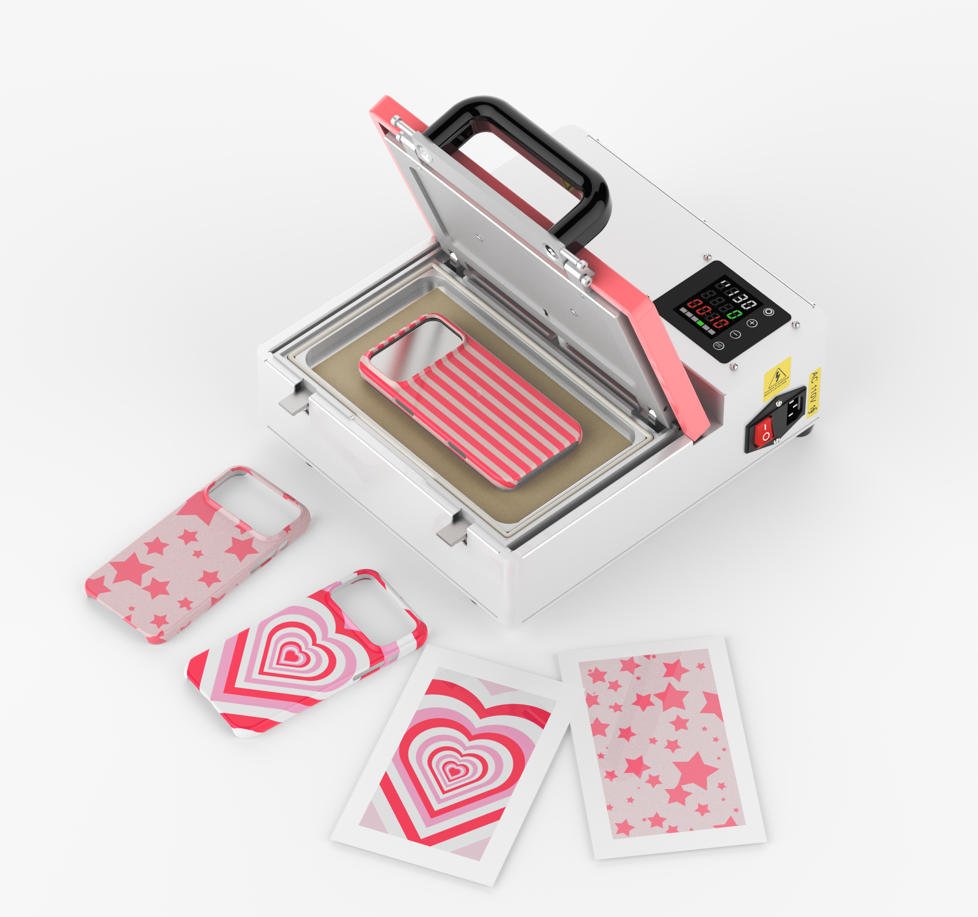
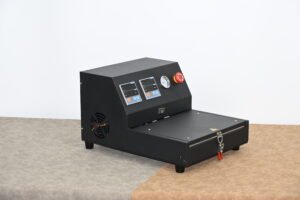
The film is loaded into a 3D vacuum machine. As the machine activates, a vacuum pump removes all air from the chamber. This creates a powerful, uniform atmospheric pressure that pulls the softened film tight against the case. This “shrink-wrap” effect ensures that the design reaches every corner, button hole, and camera cutout.
Step 4: The Heat Transfer
The heating elements within the machine maintain a consistent temperature for roughly 3 to 6 minutes (depending on the material of the case). During this time, the pores of the phone case open up, and the ink from the film sublimates into a gas, moving from the film and locking into the case.
Step 5: Post-Processing
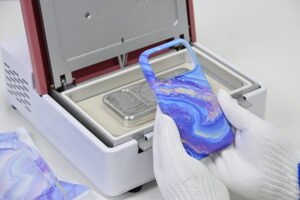
After the timer sounds, the case is removed. The film is peeled off while still warm, revealing a vibrant, high-gloss, or matte finish that wraps around all three dimensions. The case is then usually cooled in a specialized cooling rack or under a fan to “lock” the shape and the color.
Beyond the popular smartphone accessory market, Sublimation Film is a versatile medium that has unlocked new possibilities across various high-end industries. Its ability to stretch without breaking and conform to complex geometries makes it superior to traditional paper in several specialized sectors.
Here are the primary application fields for sublimation film beyond phone cases:
- Gaming Peripherals & Consumer Electronics
The “Gamer” aesthetic relies heavily on vibrant, high-definition visuals, and sublimation film provides the durability these high-use items need.
Mechanical Keyboard Keycaps: Specifically for “Five-Sided Sublimation,” the film allows designs to wrap over the top and all four sides of a keycap. Since the ink is embedded in the plastic, the legends (letters) will never wear off.

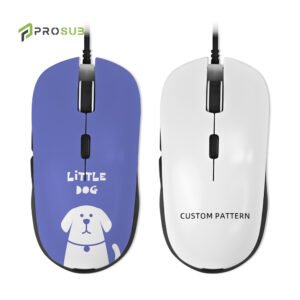
Computer Mouse Shells: Customizing the curved palm-rest of a gaming mouse is a growing trend enabled by 3D vacuum technology.
- High-End Home Decor & Architectural Elements
Architects and interior designers use sublimation film to achieve specific textures on non-traditional materials.
Curved Ceramics & Vases: Unlike traditional decals that can peel, sublimation film allows artists to wrap intricate patterns around spherical or cylindrical ceramic pieces, creating museum-quality finishes.
- Sporting Goods & Protective Gear
Sporting equipment often features streamlined, aerodynamic designs that require a “second-skin” printing approach.
Protective Padding: Hard-shell guards for shins or elbows can be customized with team logos and player numbers using 3D transfer methods.
3. Sublimation Paper vs. Sublimation Film: A Technical Comparison
One of the most frequent questions from newcomers is: “Why can’t I just use sublimation paper for my phone cases?” To understand the answer, we must look at the limitations of paper versus the strengths of film.
The Problem with Paper
Sublimation paper is excellent for flat items like T-shirts, mousepads, or bags. However, paper is composed of wood pulp or synthetic fibers that are inherently non-stretchable. When you try to wrap paper around the rounded corner of a phone case, it folds and wrinkles. These wrinkles create “voids” where the ink cannot reach the surface, resulting in unsightly white lines or “ghosting” effects on the edges of the case.
The Film Solution
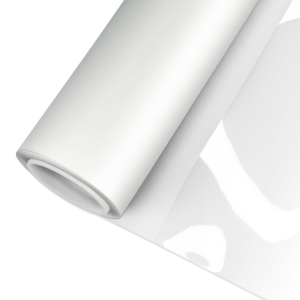
Sublimation film solves this by being a conformal medium. Because it stretches when heated, it eliminates wrinkles entirely. It provides a “full-wrap” finish, meaning the design is just as sharp on the sides of the phone as it is on the back. Furthermore, film generally has a higher ink-release rate than paper, leading to more vibrant colors and deeper blacks, which are essential for high-end photography-based designs.
Troubleshooting Common Issues
Faded Edges: This is usually a sign of insufficient vacuum pressure. If the film isn’t pulled tight against the edge, the ink gas escapes into the air rather than into the case.
Film Melting: If the temperature is too high or the heating cycle is too long, the film may fuse to the case. Precise calibration of the 3D machine is required.
Image Distortion: If the film is stretched too aggressively in one direction, the image may appear elongated. High-quality films like Advansub are engineered to stretch uniformly to minimize this effect.
4. The Heart of the Process: The 3D Vacuum Machine
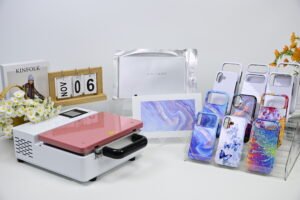
The 3D Vacuum Sublimation Machine is a masterpiece of engineering that combines an oven with a vacuum press. Unlike a traditional flat heat press, which uses a mechanical lever to apply pressure to a single plane, the vacuum machine uses the weight of the atmosphere.
Key Components:
Vacuum Pump: The “lungs” of the machine. It must be powerful enough to create a complete seal within seconds.
Heating Tubes: Usually infrared or quartz tubes that provide rapid, even heating. Evenness is key; if one side of the machine is 10 degrees cooler, the color on that side of the phone case will be noticeably lighter.
The Silicon Membrane: In some setups, a silicone sheet helps press the film down. In others, the film itself acts as the membrane, providing a more direct and efficient transfer.
These machines allow for mass production. A large-format vacuum machine can process 12 to 24 phone cases in a single 5-minute cycle, making it the most efficient way to scale a custom phone case business.
5. The Advansub Film Advantage and Future Horizons
In the world of sublimation consumables, not all films are created equal. Advansub Film (distributed by Prosub) has been developed through years of factory-based research to overcome the limitations of generic vacuum films.
Why Advansub Stands Out:
Extraordinary Elongation Rate: Advansub film can stretch significantly further than standard films. This is crucial for modern smartphones which often have deep, wrap-around screens or thick protective rugged cases.
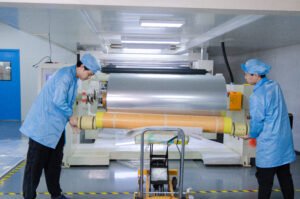
High Coating Integrity: The coating on Advansub film is designed to prevent “ink bleeding,” ensuring that even the finest text and logos remain crisp after the transfer.
Thermal Stability: It stays in its elastic state longer, giving the vacuum pump ample time to pull the film into every crevice before it sets.
Expanding into New Industries
The technology used for phone cases is now being adapted for larger-scale industrial uses. Advansub film is being utilized in the Automotive Industry for decorating curved dashboard components and interior trim pieces with wood grain or carbon fiber patterns. It is also seeing growth in the Building Materials sector for applying realistic textures to curved aluminum profiles and furniture handles.
Conclusion:
Sublimation film is far more than just a consumable; it is the essential technology for unlocking true 3D full-wrap customization in the mobile accessories market. By moving away from the structural limitations of traditional paper and embracing the superior flexibility of film and vacuum technology, manufacturers can finally eliminate “white edges” and produce phone cases that meet the rigorous aesthetic standards of today’s tech-savvy consumers.
Whether you are a boutique designer just starting your journey or a high-volume factory looking to optimize an existing production line, focusing on high-quality specialized film—like the Advansub 3D series—and mastering the vacuum transfer process is the surest path to professional success. In a market where detail is everything, the future of the phone case industry is no longer limited to the flat back of the device; it is fully three-dimensional, seamless, and incredibly durable.