I.Introduction
With the growing popularity of custom printing on apparel, accessories, and hard surfaces, choosing the right transfer medium is crucial to achieving high-quality, durable results. However, terms like “sublimation film,” “sublimation paper,” and “DTF film” often lead to confusion, especially “sublimation paper,” which can refer to various types of transfer materials. This guide will clarify the key differences in materials, processes, applications, and performance to help you select the best option for your projects.
II.What is sublimation paper?
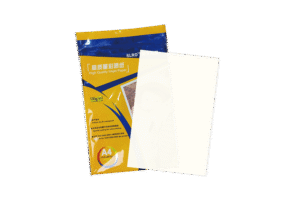
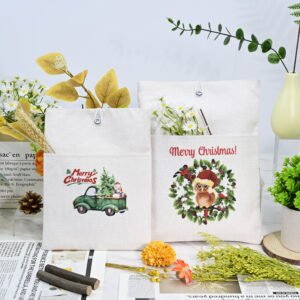
sublimation paper is a specialized coated paper designed to work with sublimation inks. It comes in various thicknesses (from 29g to 120g) and offers fast-drying options to prevent printer marks. The paper is designed to release sublimation ink as gas when heated, embedding the ink into polyester or polymer-coated surfaces to create a long-lasting design. The main benefits of sublimation paper include vibrant colors, washability, and breathability, and the ink is absorbed directly into the material, leaving no texture on the surface.
However, it has its limitations. It is only suitable for light-colored polyester fabrics or coated hard surfaces like ceramic tiles, aluminum, and glass, and it cannot be used on dark fabrics or uncoated materials. Additionally, sublimation does not support printing with white ink or other intricate details.
Compatible Equipment:
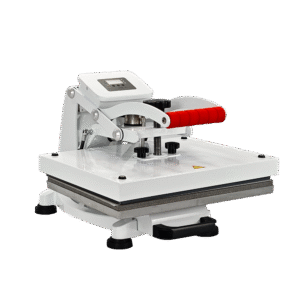
Sublimation paper requires a heat press machine capable of high-temperature pressing at temperatures ranging from 180°C to 200°C. As a coated paper, sublimation paper is relatively brittle and can be prone to wrinkles or damage if the heating pressure is uneven, potentially compromising print quality. Flatbed heat press machines, with their high parallelism between the heating plate and pressure surface, ensure even pressure distribution, thereby safeguarding the integrity of the sublimation paper and ensuring optimal transfer results.
Expand:sublimation paper vs. Inkject Paper
Inkjet paper is primarily used to transfer designs onto hard surfaces such as slate, aluminum, ceramics, and glass using an inkjet printer. It is commonly used for printing colorful designs and dries quickly, almost instantly, avoiding printer gear marks. However, the print quality on fabrics is not as durable as sublimation paper. The design sits on the surface, making it more prone to cracking or peeling over time. Therefore, inkjet paper is best suited for hard materials and is not ideal for high-quality fabric or polyester surface printing.
In the past, due to the higher cost of imported sublimation paper and limited domestic production, many manufacturers opted to use inkjet transfer paper as a substitute. While inkjet paper offers a lower cost, its shortcomings in durability and print quality make it less ideal for high-end applications. As domestic production of sublimation paper has increased and costs have decreased, it has become more affordable and effective, and fewer customers are choosing inkjet paper as a substitute for sublimation. While inkjet paper offers a cost advantage in the short term, sublimation paper provides better value and longer-lasting print results in the long run.
III.What is Sublimation Film?
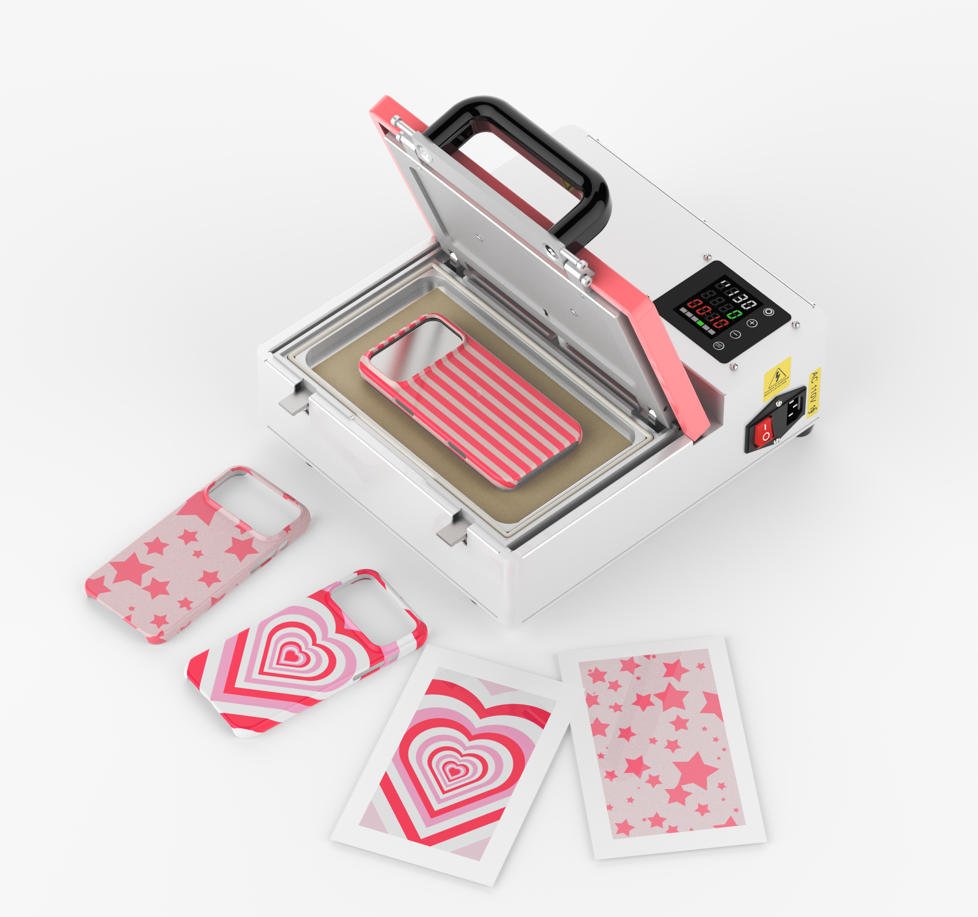
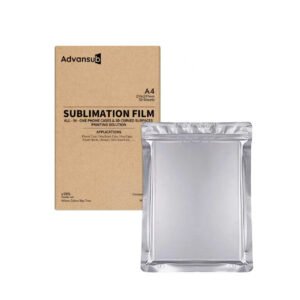
Sublimation film is a flexible, PET-based film designed for curved or irregular surfaces. It has high stretchability, making it ideal for 3D applications. The film typically has a thickness of around 215μm and can stretch up to 300% of its original size. Available in various sizes such as A3, A4, A5 sheets and rolls, this film is perfect for items like phone cases, AirPods cases,knee pads, and keycaps. The main advantage of sublimation film is its ability to wrap tightly around curved surfaces without distortion, with a high transfer rate (over 98%) that ensures vibrant, durable prints. While it performs similarly to sublimation paper, it excels in vacuum and 3D presses for high-quality transfers on irregular surfaces. The downside is that it still requires a coated substrate and is primarily suitable for hard, polymer-coated items, not soft or large fabric applications.
Compatible Equipment:
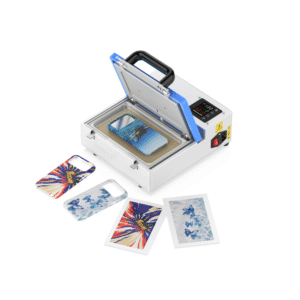
Sublimation film requires the use of a sublimation vacuum press, operating at temperatures between 130°C and 140°C for 4-6 minutes. The film’s inherent flexibility and shrinkage properties enable it to conform precisely to the curved or angled surfaces of the substrate under the vacuum pressure, ensuring a seamless, wrinkle-free, and bubble-free transfer from edge to edge.
IV.What is DTF Film?
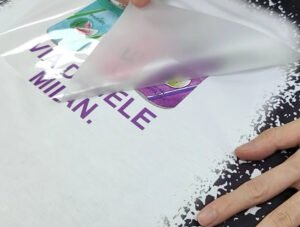
DTF film is a clear PET film printed with pigment inks, including a white underbase, and coated with hot-melt adhesive powder. The key feature of DTF film is its versatility, as it can be used on virtually any fabric type (cotton, polyester, blends, nylon, silk) and on any color fabric, including dark fabrics. DTF film provides vibrant colors and is especially effective for printing small details. The main advantage is that it does not require coated fabric, allowing for direct transfers onto various fabric colors, including dark ones. However, the downside is that the printed design sits on top of the fabric, which may cause the transfer to crack or peel over time. Additionally, DTF requires extra steps such as applying adhesive powder and curing it before heat pressing, making the process more complex than sublimation.

How To Work?
- The image is printed in mirror image onto the transfer film. For dark fabrics, a white ink base layer must be printed first to enhance color opacity and vibrancy, followed by printing the color inks on top.
- While the ink is still wet, a uniform layer of hot-melt powder is applied, which adheres to the inked areas.
- The drying equipment heats the transfer film at approximately 115-125°C for several seconds, causing the hot-melt powder to melt and fully blend with the ink, forming a strong and flexible adhesive layer.
During the transfer process, under high temperature and pressure in the machine, the melted adhesive layer on the film bonds the ink and adhesive to the blanks surface, transferring the design successfully.
V.Key Differences
Material Base:
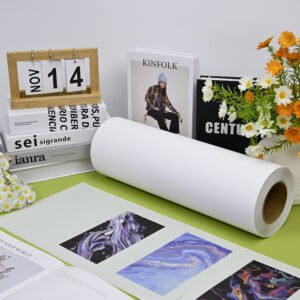
- Sublimation paper uses coated paper, designed for flat substrates.
- Sublimation film is a flexible PET film, suitable for curved or irregular surfaces.
- DTF film is a rigid PET film, printed with pigment inks and coated with adhesive powder, suitable for all types of fabric.
Substrate Compatibility:
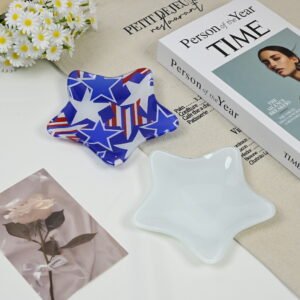
- Sublimation paper is limited to polyester or coated substrates, especially light-colored fabrics and hard surfaces like ceramics and glass.
- Sublimation film is ideal for curved or 3D items, such as phone cases, helmets, and key fobs, which have polymer coatings.
- DTF film works on a wide range of fabrics, including cotton, polyester, nylon, and blends, and it can be used on dark fabrics.
Process:
- Sublimation paper transfers ink into the material as gas under heat, permanently embedding the design inside the substrate.
- Sublimation film works similarly but excels in handling curved surfaces, achieving high-quality, wrinkle-free transfers.
- DTF film uses a printed design (including a white base), which is then coated with adhesive powder and transferred onto fabric with heat.
Applications:
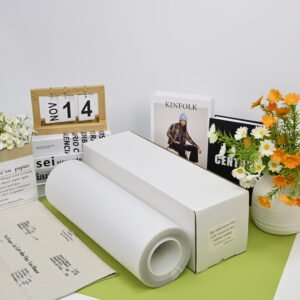
- Sublimation paper is suitable for flat textiles and hard surfaces, such as T-shirts, mugs, and rock slates.
- Sublimation film is best for 3D or curved items, such as phone cases, knee pads, and keycaps.
- DTF film is the most versatile, suitable for almost all fabric types and colors, including dark fabrics, making it ideal for custom apparel, hats, and more.
VI.When to Choose Which One?
- sublimation paper: Choose this for flat polyester fabrics or hard blanks such as mugs, tiles, and glass.
- Sublimation Film: Choose this for curved or 3D products like phone cases, helmets, and key fobs.
- DTF film: Opt for DTF when you need versatility, especially for cotton or dark fabrics, or for projects requiring intricate details.、

VII.Conclusion
Choosing the right transfer medium is critical for achieving the best results in custom printing projects. Whether you’re opting for sublimation paper for seamless permanence, sublimation film for flexibility on curved surfaces, or DTF film for maximum versatility, each material has its strengths.
As a professional supplier of sublimation blanks, Prosub advises customers to carefully consider the end-product application, material composition, budget constraints, and quality requirements when selecting the most suitable transfer solution. Properly matching the right blanks with the transfer medium not only enhances product quality but also optimizes production processes, ensuring the best economic benefits.
For any questions regarding material selection for specific applications, please don’t hesitate to contact our technical team. Prosub is committed to providing you with professional and customized solutions tailored to your needs.