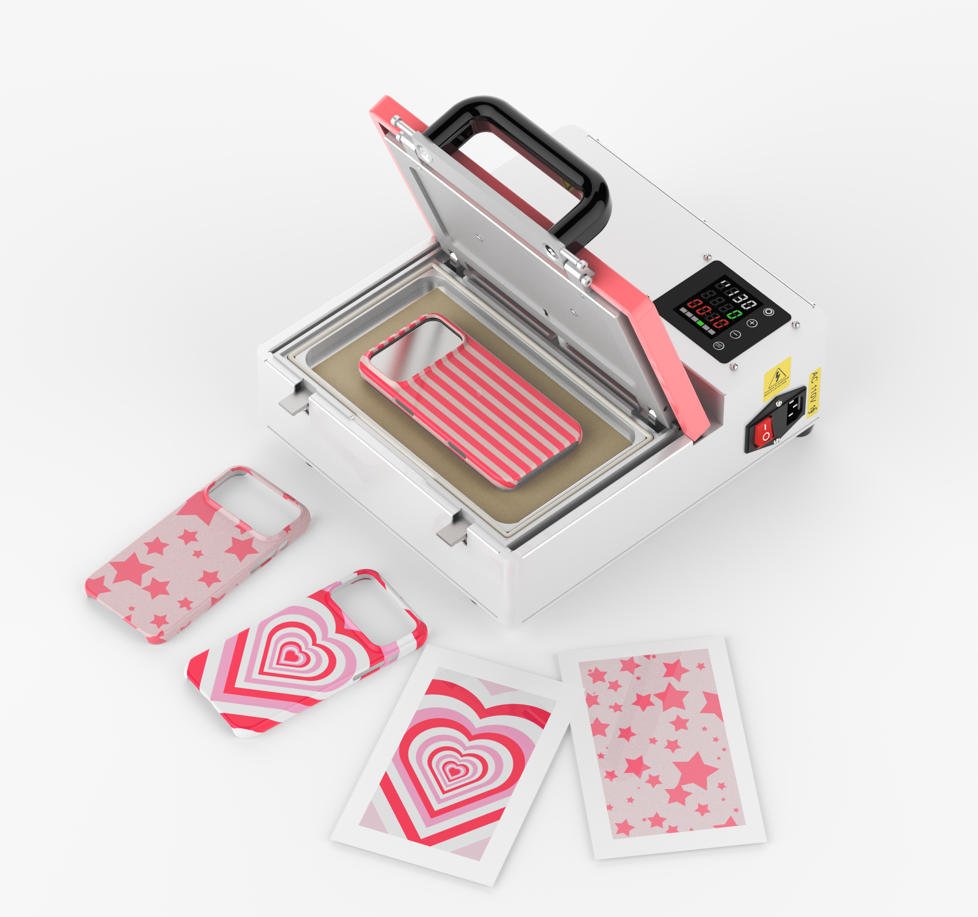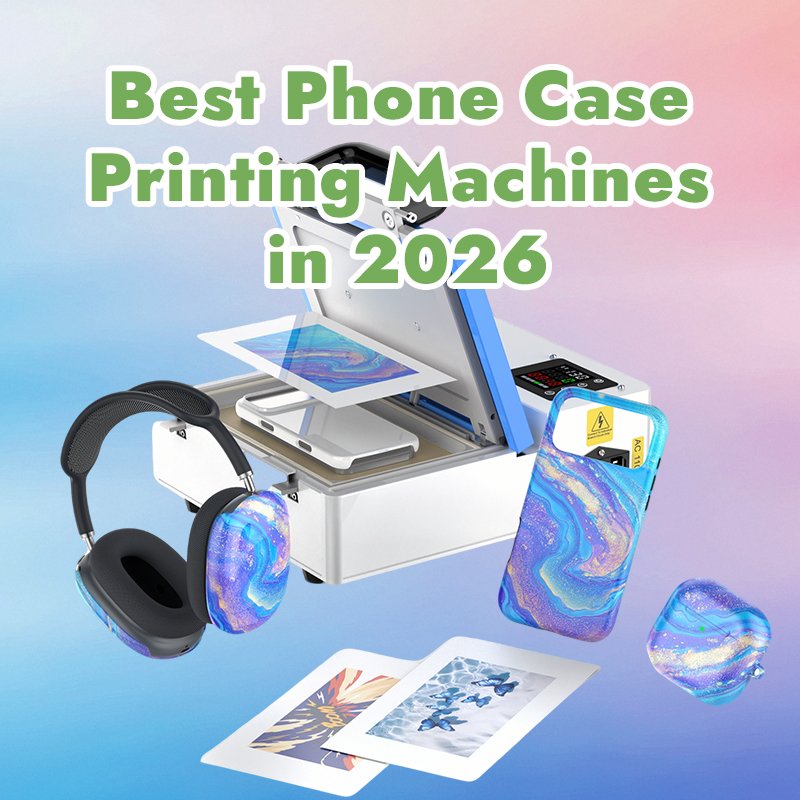
In 2026, mobile phone cases have evolved from mere “protective accessories” into trendy items that blend personalized expression with daily styling. As smartphones like the iPhone 17 series and high-end Android curved-screen models continue to update, consumer demands for mobile cases extend beyond aesthetics to focus on fit, durability, and fade resistance. Meanwhile, social media platforms such as TikTok, YouTube, and Instagram have further amplified personalized consumption trends like “showcasing mobile cases,” “customized gifts,” and “brand co-branded merchandise.” This has made mobile case customization—with its low startup costs, high repurchase rates, and stable profit margins—remain a top choice for businesses. This article will explore mainstream mobile case printing technologies in 2026, compare the pros and cons of different equipment, and highlight why 3D sublimation vacuum machines have become the core solution for curved mobile case customization. It aims to provide precise references for new entrants, studios, or factories planning to upgrade their equipment.
I. Why Invest in PhoneCase Printing Machine?
From a business perspective, mobile case customization still holds significant competitiveness in 2026:
- Clear Profit Structure & Low Inventory Pressure: The on-demand production and single-piece customization model avoids mass stockpiling. Additionally,phonecases are compact, resulting in much lower logistics costs compared to categories like apparel.
- Versatile Application Scenarios: It caters to side hustles/individual sellers, offline gift shops, small printing stores, cross-border e-commerce, independent websites, as well as brand promotions and event giveaways.
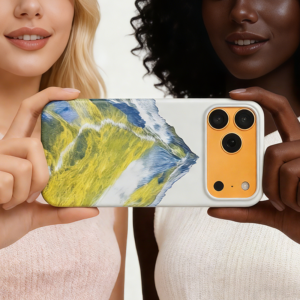
- Consumption Trends Drive Technological Upgrades: Consumers are no longer satisfied with “a single image on the front.” Instead, they care about full coverage, whether there are blank spaces on edges and corners, and scratch resistance without fading. Especially with new mobile phones featuring increasingly complex rounded corners and curved designs, higher requirements are placed on printing technologies.
II.Comparison of Mainstream Phone Case Printing Technologies in 2026
Currently, there are four main phone case printing solutions on the market, each with its own advantages and disadvantages:
-
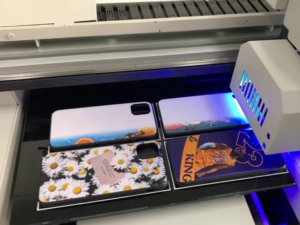
UV Flatbed Printing
UV flatbed printers form images directly on the mobile case surface through inkjet printing and UV curing. They are compatible with various materials, easy to operate and learn, and can achieve partial 3D textures without transfer steps.
However, they have limited coverage for complex curved surfaces, with easy blank spaces on edges and recesses. The ink layer adheres to the surface, resulting in insufficient long-term scratch resistance. They are more suitable for flat or slightly curved surface requirements.
-
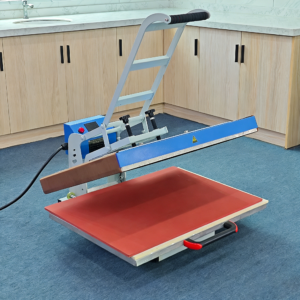
Traditional Sublimation + Heat Press Machine
Traditional sublimation combined with heat press machines is an early common solution. It offers low costs, vibrant colors, mature technology, and easily accessible consumables.
However, it can only handle flat or slightly curved surfaces, making it difficult to cope with the rounded corners and side edges of modern mobile phones, with limited full-coverage effects.
-
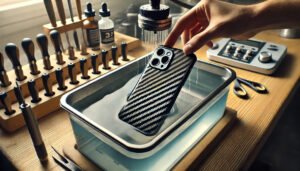
Water Transfer Printing(Hydro Dipping)
Hydro Dipping (Water Transfer) is a powerful technique for creating patterns on curved surfaces. Its core principle is dissolving a pattern-printed hydro dip film on the water surface, then submerging the object to achieve full and seamless pattern coverage.
Ideal for curved cases, irregular-shaped cases and full-wrap structures, it excels at covering complex curved surfaces with continuous, unbroken patterns.
However, this process features complex procedures and relatively high costs, with the stability of finished products heavily relying on the operator’s hands-on experience. For this reason, it is suited for crafting special textures and custom patterns, as well as manufacturing niche high-priced products.
-
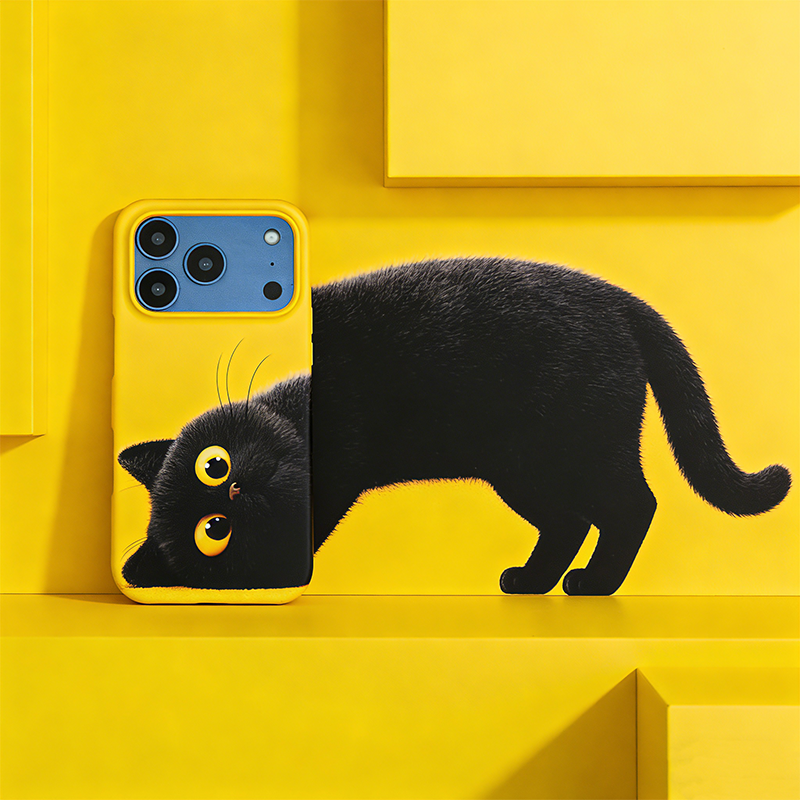
Sublimation Transfer+3D Sublimation Vacuum Machine
Sublimation transfer combined with sublimation vacuum machine is a heat and press-based printing technology that uses dye sublimation ink to create vibrant, permanent designs. The process works by printing the image onto a special sublimation transfer film.
When heated to a high temperature (typically 130–140°C), the solid dye in the ink transforms directly into a gas. This gas then penetrates the pores of a compatible substrate, where it bonds permanently as it cools and returns to a solid state.
The result is a high-resolution, photo-quality print that is embedded into the material rather than sitting on the surface — making it extremely durable, scratch-resistant, waterproof, and fade-proof over time. Unlike regular inks or vinyl, there is no peeling or cracking.
III. Key Factors for Choosing a Phone Case Printing Machine in 2026
Before selecting equipment, focus on six core dimensions:
- Support for 360° full coverage
- Adhesion capability for curved surfaces, edges, and grooves
- Scratch resistance, color stability of finished products, and single-batch production capacity (number of slots)
- Operation difficulty and learning cost
- Stability of the consumable system and long-term supply capacity
- Whether the equipment has safety certifications and after-sales support
These factors directly determine production efficiency, product quality, and commercial profitability.
IV.Recommended List of Top Mobile Case Printing Machine in 2026
Based on different technical characteristics and applicable scenarios, the following targeted recommendations are provided:
-
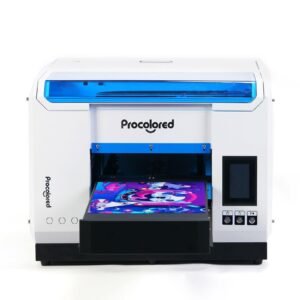
UV Flatbed Printing Technology
Suitable for businesses requiring flat/slightly curved surfaces, multi-material compatibility, and quick setup.
Recommended models: Procolored/KingJet A3/A4 desktop UV flatbed printers (such as the L805 modified series).
Core advantages: Direct inkjet printing + white ink priming, supporting colored/transparent/dark cases, prominent 3D texture effects, no transfer steps, and instant drying.
The technology is mature and stable in 2026, with affordable prices. Finished products can be shipped immediately, making them suitable for the “print-on-demand” online model. They are ideal for small shops or side hustles with a daily output of 10-50 pieces, covering materials like silicone, TPU, wood, and acrylic.
Disadvantages: Limited coverage for complex curved surfaces, easy blank spaces or uneven ink layers on edges/recesses.
-
Hydro Dipping (Water Transfer Printing)
Hydro Dipping (Water Transfer Printing) is ideal for complex curves and creating unique textures & patterns:
Recommended models: TSAUTOP hydro dipping tanks/printers, TWN Industries professional tanks, and simple manual setups consisting of a dipping tank, activator and clear coat spray.
This technique leverages water pressure and activator to make film wrap seamlessly around irregular shapes, excelling at producing camo, wood grain, carbon fiber and marble textures on materials like plastic and metal, and crafting one-of-a-kind visual effects thanks to fluid dynamics.
Disadvantages: the process is highly manual, requiring steps like printing film, activating, dipping, rinsing, drying and applying a protective clear coat, it has low efficiency for small or custom batches, offers only medium durability as the finish is surface-based and prone to chipping or scratches without perfect sealing, and it is a messy process involving solvents and activators.
As such, hydro dipping is best suited for workshops and factories processing 20–100+ pieces per day with texture-focused designs, and is not ideal for fast personalized orders.
-
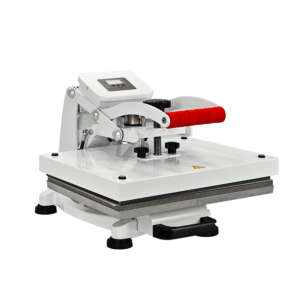
Traditional Sublimation + Heat Press Machine
Suitable for businesses starting with flat/slightly curved surfaces and low costs.
Recommended configuration: Epson 4880C/7380 printers paired with HTVRONT’s new flatbed heat transfer machines or Prosub heat press machine.
The entire set of equipment only costs a few thousand dollars, with extremely vibrant colors and permanent dye penetration. It is ideal for complete beginners with very low budgets, individual sellers focusing on simple patterns or flat cases.
Disadvantages: It performs poorly in handling modern curved mobile phones, with many blank edges and dead angles.
-
Sublimation Transfer+3D Sublimation Vacuum Machine
The top choice for curved mobile cases in 2026 and the preferred option for full coverage.
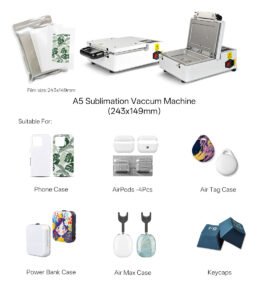
Recommended model: Prosub A5 sublimation vacuum machine (best for entry-level use), which can be upgraded to A4 dual-slot/A3 four-slot/six-slot models.
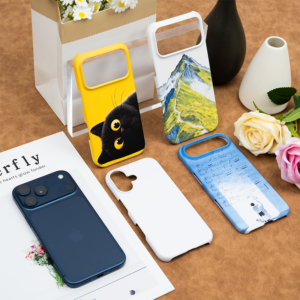
Core advantages: Vacuum negative pressure + uniform heating enables true 360° seamless full coverage without dead angles or blank edges. Colors reach photo-level quality, with dye molecules permanently embedded for scratch resistance and no fading. It also supports efficient batch production with multiple slots.
With 15 years of experience in the sublimation field, Prosub boasts over 500 exclusive aluminum jigs, 7-day custom mold service, CE/FCC certifications, and strict quality inspections, ensuring high consistency of finished products.
The A5 model offers excellent cost performance, suitable for beginners/side hustles to test the market. Online stores/studios can upgrade to A3 four-slot or six-slot models to achieve a daily output of 50-200+ high-end full-coverage cases. Additionally, detailed tutorials and videos will be provided.
The reason why sublimation vacuum machines have become the market mainstream lies in their technological logic of “all-round coverage + molecular-level penetration.”
Unlike the “one-way pressure” of flatbed heat pressing and the “surface adhesion” of UV direct printing, this technology fundamentally solves the adhesion problem of complex curved surfaces, perfectly meeting the market demand for high-end full-coverage cases. As an industry benchmark, Prosub further consolidates its core position by offering over 500 exclusive molds, multi-size and multi-slot solutions, CE/FCC certified equipment, and integrated support for molds and consumables.
V. How to Quickly Launch a Phone Case Printing Business in 2026?
To quickly enter the market and achieve profitability, follow these six key steps:
- Define Target Customers: Different audiences (personal customization users, student groups, corporate gift clients) have significant differences in design styles, quality requirements, and price ranges, which directly determine the product direction.
- Select Appropriate Printing Technology: Prioritize 3D sublimation vacuum machines for core full-coverage curved mobile cases. For flat or small-curved mobile cases with cost sensitivity, choose traditional sublimation + heat press machines.If you require complex curves and unique texture patterns, then choose water transfer printing. Comprehensive evaluation based on product positioning is necessary.
- Establish Online Display Channels: Clearly showcase product effects, customization options, and application scenarios on platforms like Shopify, Etsy, or independent websites to allow customers to quickly perceive core advantages.
- Offer Personalized Customization Services: Support customization with photos, text, or exclusive patterns—this is the key to increasing product premium and customer loyalty.
- Develop Promotion Strategies: Utilize visual platforms such as Instagram, TikTok, and YouTube to display production processes and finished product effects, combined with targeted promotion to reach target audiences.
- Focus on Quality and Service: Stable printing quality, durable finished product effects, and timely customer response are the foundations for long-term development.
VI. Cost Reference and Cost-Effectiveness Analysis of Phone Case Printing Machine in 2026
Phone case printing machine prices vary greatly depending on technology type, production scale, and quality requirements:
- Entry-level traditional sublimation + heat press machine:$$800
- Mid-range hydro dipping equipment or small hydro dipping set:$$3,000
- Professional-grade UV printers (such as high-end models from Roland, Mimaki, Beric): $20,000+
Prosub sublimation vacuum machines offer professional-grade 360° seamless full-coverage effects at a mid-range price, far exceeding UV equipment in the same price range. They also feature permanent dye embedding (scratch resistance, fade resistance, water resistance), multi-slot batch production to reduce unit costs, and easily accessible consumables.
Coupled with its 15 years of industry experience, exclusive molds, and comprehensive after-sales service, it becomes a cost-effective choice for businesses pursuing high profits and differentiated high-end mobile cases. Whether starting a side hustle or expanding a business, professional-grade quality can be achieved with a mid-range budget.
VII.Conclusion
In the 2026 mobile case market, high-quality, full-coverage, and durable products have become core competitiveness. 3D sublimation vacuum machines are no longer an optional accessory but an essential core equipment for creating such products. From the entry-level Prosub A5 to higher-capacity models, vacuum sublimation technology is helping more and more businesses break through the limitations of traditional processes, accurately seize business opportunities under the wave of personalized consumption, and create customized mobile case products with stronger market competitiveness.