The mechanical keyboard industry has evolved from a niche hobby into a massive global market driven by aesthetics, tactility, and personalization. For enthusiasts and daily typists alike, keycaps are the most critical visual and tactile component of a keyboard. As demand for intricate, full-wrap, and custom-designed keycaps reaches an all-time high, manufacturers are constantly searching for production methods that deliver retail-grade durability and high-fidelity graphics.

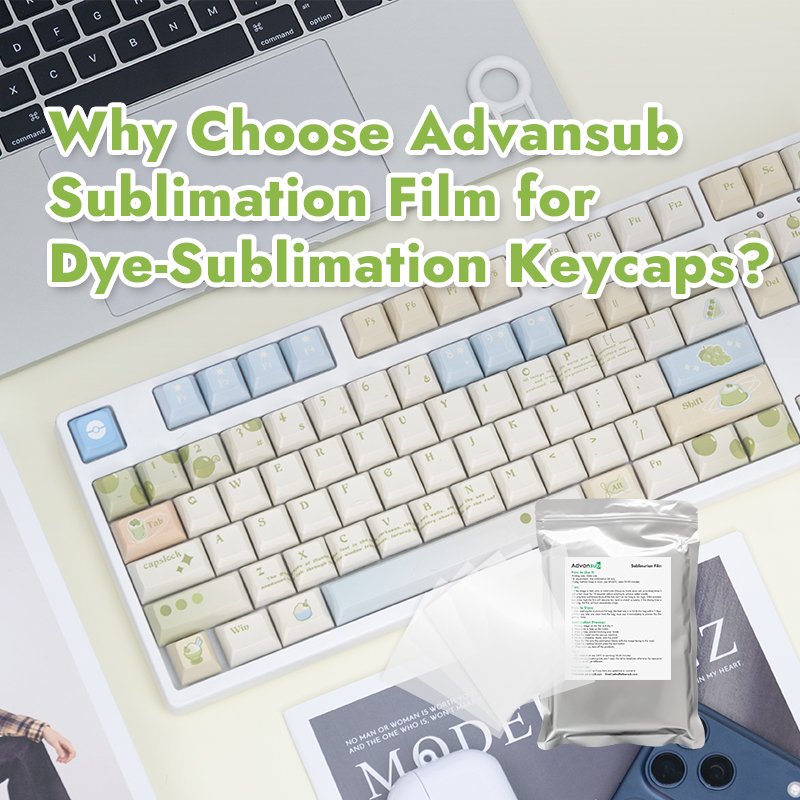
While traditional printing methods often fall short on the multi-dimensional, curved geometry of a keycap, a revolutionary material has emerged as the definitive solution: Advansub Sublimation Film (3D Vacuum Film). This comprehensive guide explores why Advansub film, combined with advanced 3D vacuum technology, is the ultimate choice for producing premium dye-sublimation keycaps.
1. Understanding Keycap Classification: Materials and Profiles
To understand why sublimation film is so revolutionary, one must first understand the canvas itself. Keycaps are categorized primarily by two factors: their plastic material composition and their structural shape.
Keycap Materials: ABS vs. PBT
ABS (Acrylonitrile Butadiene Styrene): Historically common, ABS is a softer plastic that is easy to mold but prone to wearing down over time. It develops an oily “shine” with heavy use, and its lower melting point makes it incompatible with high-heat dye-sublimation processes.
PBT (Polybutylene Terephthalate): The gold standard for premium keyboard enthusiasts. PBT is a dense, crisp, and brittle polymer with a textured matte finish that resists grease and shine. Crucially, PBT has a remarkably high melting point (often exceeding 220°C). This extreme thermal stability makes it the perfect substrate for dye-sublimation, as it can withstand the heat required for ink vaporization without warping or deforming.
Keycap Profiles
Keycaps are not flat discs; they are sculpted, three-dimensional geometric objects with unique slants, heights, and concave tops designed for ergonomic typing. Common profiles include:
OEM & Cherry: The standard, sculpted profiles featuring distinct angles for each row of the keyboard.
SA & MT3: High-profile, deeply spherical keycaps that resemble vintage typewriters, boasting deep recesses and steep, curved vertical walls.
XDA & DSA: Uniform-height profiles with flat or slightly concave tops.
Because every keycap profile features sharp corners, multi-angled side walls, and scooped top surfaces, decorating them uniformly presents a massive manufacturing challenge.
2. The Features and Advantages of Dye-Sublimation Keycaps
There are two primary methods used to create legends (letters/symbols) and designs on high-end PBT keycaps: Double-shot Injection Molding and Dye-Sublimation. While double-shot molding is excellent for simple, two-color designs, Dye-Sublimation is the undisputed king of complex, multi-color, and full-surface artwork.
Permanence and Durability
Unlike pad printing or UV printing, which merely deposits a fragile layer of ink on top of the plastic, dye-sublimation embeds the ink into the plastic. Under intense heat, the PBT pores open, and the sublimation ink transforms into a gas, permeating the molecular structure of the keycap. Once cooled, the design becomes an inseparable part of the keycap. It will never peel, crack, fade, or wear away, even after decades of intense typing or gaming.
Unmatched Design Freedom
Dye-sublimation allows for ultra-high-resolution printing, enabling gradients, complex illustrations, anime artwork, and intricate patterns to be transferred onto the keycaps.
The Rise of “Five-Sided Dye-Sub”
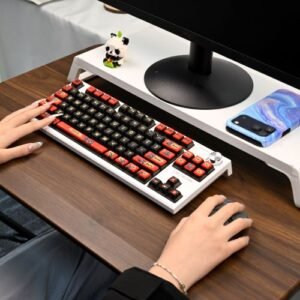
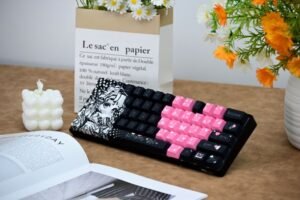
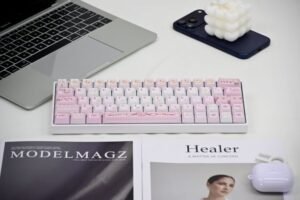
Traditional dye-sublimation was limited to the flat, top surface of the keycap. However, modern trends demand Five-Sided Dye-Sublimation, where the artwork seamlessly wraps over the top surface and bleeds down all four vertical walls of the keycap. This creates an immersive, 3D artistic canvas on the keyboard. To achieve flawless five-sided dye-sub without ugly white edges or blurred corners, manufacturers must abandon traditional paper and upgrade to sublimation film.
3. The Advansub Film Advantage: Engineered for Keycaps
Standard sublimation paper is completely flat and rigid. If you attempt to wrap paper around the sharp corners and steep side walls of an OEM or SA profile keycap, the paper will fold, wrinkle, and crease. These creases create air gaps where the gasified ink escapes, resulting in “ghosting,” blurred lines, and unprinted white streaks along the edges.
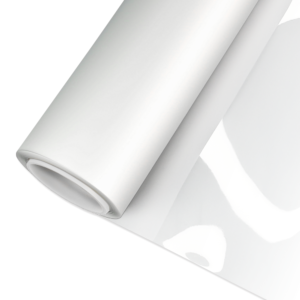
Advansub Sublimation Film solves this structural limitation entirely through advanced material science.
1.Superior Multi-Directional Stretchability
Advansub film is engineered from a modified, ultra-elastic polymer coating. When exposed to the controlled heat of a 3D vacuum machine, it reaches a glass transition state, allowing it to achieve up to a 300% elongation rate. Instead of folding like paper, Advansub film stretches uniformly, acting like a flexible “second skin” that conforms flawlessly to the concave tops, sharp corner radii, and vertical side walls of all five sides of the keycap.
2.High Ink Absorption and Transfer Rate
Keycap designs often require rich, deep blacks, striking contrast, and vibrant color gradients. Advansub film features a proprietary high-density microporous chemical coating. It absorbs heavy ink loads without bleeding or smudging during the printing phase, and it boasts a near-perfect ink release rate during the heating cycle. This ensures maximum color density transitions into the dense PBT plastic, resulting in crisp legends and breathtakingly vivid graphics.
3.Uniform Image Integrity
A major flaw in generic sublimation films is uneven stretching, which distorts letters and geometric patterns. Advansub film is formulated for balanced tensile strength, meaning it stretches symmetrically under vacuum pressure. This keeps font proportions intact and prevents your legends from looking warped or skewed across the keycap face.
4. Specialized 3D Vacuum Machinery for Keycap Production
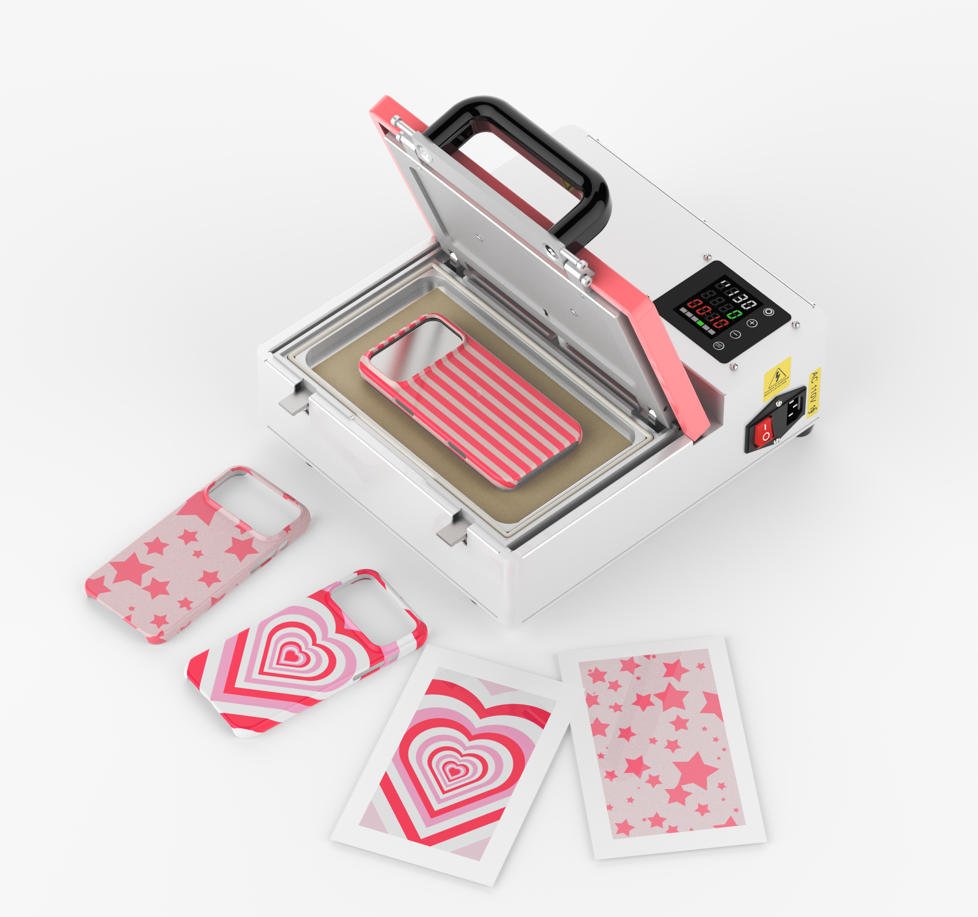
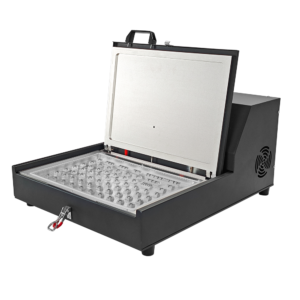
The physics of five-sided keycap sublimation requires a specialized machine capable of applying simultaneous, uniform pressure across complex geometry. A traditional flatbed heat press cannot accomplish this; you must use a 3D Vacuum Sublimation Machine.
How the Vacuum System Works
Instead of using mechanical plates to squeeze the medium, a 3D vacuum machine utilizes atmospheric pressure. The keycaps are loaded into the machine, and a powerful vacuum pump completely evacuates the air from the chamber. This creates a uniform pressure that forces the heated, pliable Advansub film tightly against every square millimeter of the keycap’s five exposed surfaces.
Key Features of Keycap-Optimized Vacuum Machines:
Precision Industrial Vacuum Pumps: Must be capable of rapidly drawing a deep vacuum seal so the film wraps around the tight gaps between adjacent keycaps before the temperature spikes too high.
5. The Step-by-Step Printing Process for Five-Sided Keycaps
Achieving retail-ready, flawless dye-sub keycaps requires a structured, meticulous workflow. Here is the step-by-step manufacturing process using Advansub film and Prosub vacuum technology:
Step 1: Digital Design and Mirror Printing
Using design software, layout your keycap artwork using a specialized template tailored to your specific keycap profile . The template accounts for the dimensions of the top face and all four side walls. Print the design onto the matte, coated side of the Advansub Sublimation Film using a high-resolution sublimation printer and premium inks. Crucial: The design must be printed in mirror image.
Step 2: Keycap Tooling and Jig Loading
Because vacuum pressure is intense and PBT becomes slightly soft under high heat, keycaps require internal support to prevent their stems from deforming. Place high-grade PBT keycap blanks onto a specialized metal sublimation jig (tooling matrix). This jig features custom metal nodes that insert into the underside of each keycap, locking them firmly in place, keeping them level, and absorbing structural stress.
Step 3: Film Alignment and Vacuum Chamber Setup
Position the printed Advansub film directly over the loaded keycap jig. Secure the film within the clamping frame of the 3D vacuum machine. Ensure the alignment markers on your film match the physical layout of the keycaps perfectly.
Step 4: The 3D Sublimation Cycle
Close the machine chamber and initiate the automated cycle.
1.Pre-heating: Infrared elements raise the chamber temperature, softening the Advansub film.
2.Vacuum Draw: The vacuum pump engages, instantly removing air and pulling the elastic film tight around all five sides of each keycap.
3.Heat Transfer: The temperature is stabilized (typically between 180°C to 200°C) for a precise duration—usually between 3 to 5 minutes depending on the PBT density. The ink sublimates into gas and permanently embeds into the keycaps.
Step 5: Cooling and Final Inspection
Once the timer concludes, the vacuum releases. Carefully remove the hot jig from the machine and peel the spent Advansub film away while it is still warm. The film will lift off cleanly, leaving no residue behind. Allow the keycaps to cool completely on a dedicated cooling rack. Once cooled, inspect the corners and legends for perfect alignment and color vibrancy before packaging your custom set.

Conclusion
The market for mechanical keyboards shows no signs of slowing down, and consumer expectations for premium keycaps have never been higher. To succeed in this lucrative industry, manufacturers can no longer rely on outdated, flat printing methods that leave white lines, blurred edges, and faded corners.
Advansub Sublimation Film bridges the gap between complex industrial design and mass manufacturing. By providing unprecedented 300% stretchability, flawless ink transfer, and pairing seamlessly with professional 3D vacuum machinery, Advansub enables creators to design stunning, five-sided, full-wrap keycap masterpieces that will last a lifetime. Upgrade your production line with Prosub and Advansub technology today—because the future of keyboard customization is fully three-dimensional.

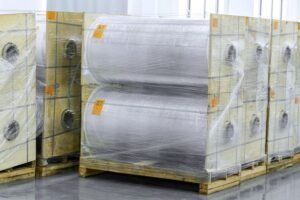
As a professional manufacturer of 3D sublimation film, Prosub combines cutting-edge manufacturing technology with a commitment to sustainability. Our fully automated production facilities produce high-quality transfer films suitable for phone cases and 3D curved surface printing solutions, ensuring timely global delivery. We have invested heavily in environmentally friendly processes and are BSCI and ISO9001 certified, holding a dominant position in the sublimation film manufacturing industry thanks to our unparalleled speed, scale, quality, and value.