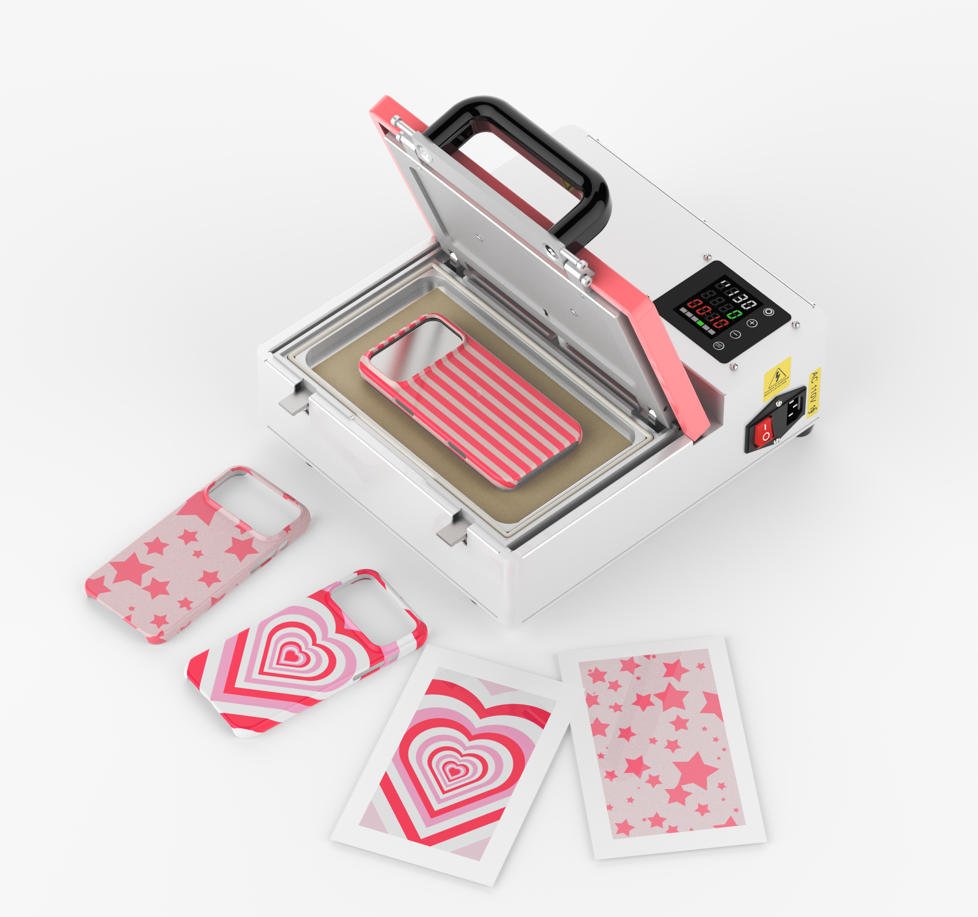
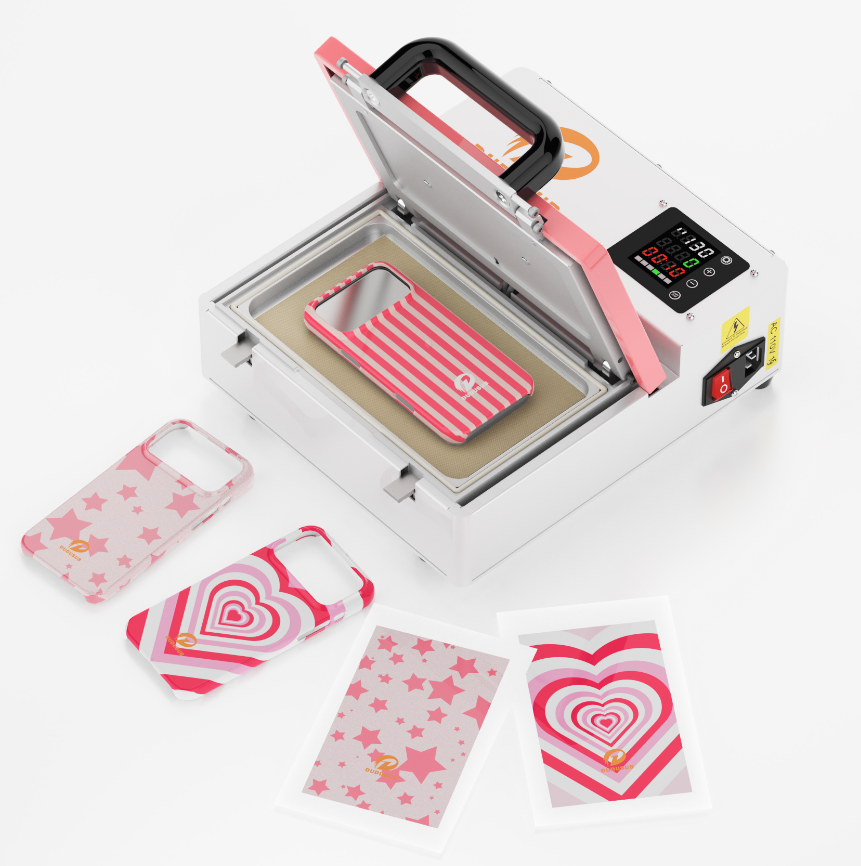
In the smartphone accessories industry, coated phone cases represent a high-end product that integrates materials science with precision surface treatment technology. It does not refer generally to phone cases with coatings, but specifically denotes a substrate that has undergone special surface treatment to adapt to sublimation transfer technology. This article will provide an in-depth analysis of the core principles, manufacturing processes, and unique value of coated phone cases.
Table of Contents
ToggleTechnical Definition of Coated Phone Cases
The essence of a coated phone case is that of a functional substrate. Its core lies in applying a functional coating, specifically designed for sublimation transfer, onto the molded phone case base material (such as Polycarbonate, PC) through a precise coating process.
This coating is typically a specially modified polyurethane paint, whose role far exceeds that of a ordinary protective finish. It is a precision-engineered “dye-receiving layer.” Its polymer structure can activate at specific high temperatures, allowing gaseous disperse dye molecules to penetrate and permanently anchor, thereby achieving a molecular-level integration of the pattern from the transfer film onto the phone case.
Core Process: 3D Curved Surface Dye-Sublimation Vacuum Transfer Technology
To achieve perfect, wrap-around printing on the complex three-dimensional structure of phone cases (such as camera modules and curved edges), 3D Curved Surface Dye-Sublimation Vacuum Transfer becomes the key technology.
1. The Three Elements of the Process:
- The Coated Phone Case: The PC base material treated with the aforementioned PU coating, which serves as the carrier for the pattern.
- 3D Dye-Sublimation Transfer Film: A special polymer film with high stretchability and heat resistance, onto which the pattern is pre-printed.
- Dye-Sublimation Vacuum Machine: The core equipment that generates uniform isostatic pressure through vacuum, ensuring the transfer film tightly conforms to every立体 corner of the phone case.
2. Workflow:
- Loading and Fixturing: The transfer film printed with the mirror image of the pattern is precisely aligned and placed over the coated phone case.
- Vacuum Lamination: The machine creates a vacuum, using atmospheric pressure to uniformly press the transfer film onto the entire surface of the case, including vertical walls and recesses.
- Heating and Transfer: While maintaining the vacuum, the unit heats up (typically about 130°C). The dye on the transfer film sublimates into a gas, penetrates, and permanently fixes within the PU coating.
- Cooling and Demolding: After cooling, the transfer film is peeled away, leaving the pattern perfectly transferred onto the phone case.
The Ultimate Advantages of Coated Phone Cases
Finished products manufactured through this process exhibit unparalleled advantages over traditional methods:
- Integrated Pattern and Casing: The pattern resides within the coating layer, rather than being adhered or printed on the surface. This results in extremely high scratch resistance and abrasion resistance. The pattern will never peel off, and the surface remains smooth to the touch.
- Complete, Dead Angle-Free Wrap: Enables 360° full-coverage, seamless pattern application around the phone case, meeting the most complex customization design requirements.
- Exceptional Color Performance: Achieves photo-quality, high-definition patterns with vibrant, rich colors and natural gradients. It also possesses excellent UV resistance, ensuring the colors remain fast and do not fade.
- Synergistic Material Properties: Taking the “PC substrate + PU coating” combination as an example, it synergizes the high strength and impact resistance of PC with the superior surface durability and rich tactile feel (such as matte, silky touch) provided by the PU coating.
Comparative Analysis of Different Phone Case Materials
1. Coated Phone Case
- Protection: Combines the impact resistance of PC with the abrasion resistance of the PU coating, providing dual-layer protection.
- Tactile Experience: The coating can be formulated to offer various finishes (e.g., matte, satin, skin-like).
- Decoration: Supports 360° full-wrap, high-definition patterns with vibrant, long-lasting color.
- Durability: Patterns are embedded within the coating, making them scratch-resistant, non-peeling, and resistant to yellowing.
- Ideal For: High-end customization, limited edition branded products, and users with high demands for design and quality.
2. Traditional TPU Phone Case
- Protection: Good flexibility and shock absorption, but relatively weaker impact resistance.
- Tactile Experience: The surface can feel tacky and is prone to attracting dust and fingerprints.
- Decoration: Typically uses screen printing or label application; patterns are susceptible to wear.
- Durability: Prone to yellowing, deformation, and has a limited service life.
- Ideal For: Users seeking basic daily protection and prioritizing cost-effectiveness.
3. Pure PC Material Phone Case
- Protection: High impact resistance, but lacks toughness; may shatter under severe impact.
- Tactile Experience: Smooth surface but prone to fingerprints; offers a relatively hard grip.
- Decoration: Often uses IMT (In-Mold Transfer) process; pattern choices are limited.
- Durability: Scratch-resistant but prone to cracking.
- Ideal For: Users seeking a slim profile and rigid protection.
4. Other Material Phone Cases
- Metal: Offers strong protection but can interfere with signal reception; feels cold to the touch.
- Leather: Provides a premium aesthetic but offers weaker protection and is not wear-resistant.
- Glass: Aesthetically pleasing but fragile, with poor practicality.
Differentiated Advantages of Coated Phone Cases
- Perfect Balance of Protection and Aesthetics: Coated phone cases skillfully combine the structural strength of PC with the surface properties of the PU coating. This “combining rigidity with flexibility” design philosophy achieves an optimal balance between reliable phone protection and exquisite decorative effects.
- Customizable Tactile Experience: Compared to other materials, coating technology allows for precise control over the surface feel. Users can choose from different tactile effects based on preference, a feature difficult to achieve with other materials. This user-centric design significantly enhances the experience.
- Long-Lasting Decorative Effect: Unlike traditional printing methods, the patterns on coated phone cases are permanent. Regardless of frequent daily use, the patterns maintain their vibrancy. This durability far surpasses that of other types of decorative cases.
How to Choose the Right Phone Case for You
- Pursuing Personality and Quality: Coated phone cases are the best choice, especially for users who value design and durability.
- Focusing on Cost-Effectiveness: TPU cases provide basic protection and are suitable for budget-conscious users.
- Requiring Ultimate Protection: Pure PC hard cases or specialized protective cases are more suitable for extreme use environments.
- Business Settings: Leather materials can provide a unique professional business aesthetic, but one must accept their weaker protective capabilities.
Through innovative process technology, coated phone cases have successfully overcome the long-standing industry dilemma of having to choose between “protection” and “aesthetics.” They are not merely protective accessories but also important carriers of user personality and taste. With continuous technological advancements, coated phone cases will undoubtedly bring more surprises to consumers and drive the entire industry toward higher-quality development.
When selecting a phone case, consumers should fully consider their usage needs, aesthetic preferences, and usage scenarios to choose the product that best suits them. For users pursuing excellent quality and unique design, coated phone cases are undoubtedly the most worthwhile choice.