Between 2024 and 2025, the global dye-sublimation printing market grew by an impressive 18.7%, while thousands of small and medium-sized screen printing shops quietly exited the market. This shift in the industry landscape is no accident — dye-sublimation technology has achieved what was once deemed impossible by the industry: photo-realistic colors, true zero hand feel, and exceptional durability, all at a lower cost per print than ever before.
Whether you specialize in custom apparel, run a gift shop, supply team merchandise, or scale an e-commerce brand, one question now lies at the heart of every production decision:
In 2025, which is truly the best choice — Screen Printing, DTG, or Dye Sublimation?
Through this guide, you will clearly understand which printing method delivers the best color performance, lowest production costs and most profitable future for your business.
What These Three Methods Really Are?
Sublimation Transfer
Sublimation transfer (also known as dye-sublimation printing, or simply “sublimation”) is a digital printing method that produces full-color, photo-quality designs. These designs become permanently integrated with the material — offering both zero hand feel and lifelong durability.
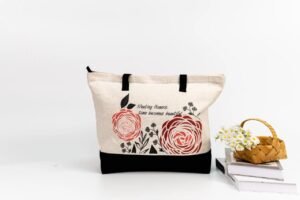
Core Characteristics:
Molecular-Level Penetration
The colorant permeates deep into the blanks’ internal structure rather than merely forming a surface layer, resulting in a matte appearance without a filmy feel.
High Thermal Stability
Because the dyes are anchored within the substrate, the final image resists fading from UV exposure, damage from chemical solvents, and wear from surface abrasion.
Blanks Requirements
Optimal dye diffusion is achieved only on materials with high polyester content or on surfaces that have been pre-treated with a polymer coating.
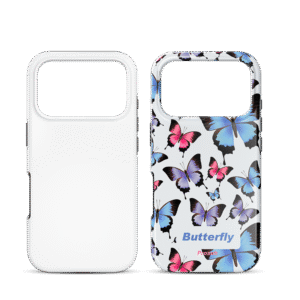
Application Precision
This method ensures highly consistent reproduction of intricate graphics and smooth gradient transitions.
Screen printing
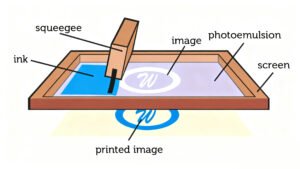
Screen printing, also known as stencil printing, involves creating perforations in the image areas of the screen while keeping the non-image areas opaque. Screen printing produces thick, vibrant inks and is primarily controlled by the size of the perforations on the screen. It is a simple process.
Key Advantages
- Ideal for large-batch orders of simple graphics; the larger the batch, the lower the unit cost.
- Offers excellent compatibility with pure cotton fabrics, making it a traditional top choice for bulk cotton printing.
Major Limitations
- High plate-making costs and complex processes for multi-color designs, making small-batch, multi-color orders cost-ineffective.
- Ink layers adhere to the material’s surface, leading to cracking, peeling, and poor durability over long-term use.
- Limited color accuracy; it struggles to reproduce complex gradients and fine design details, resulting in weak color expression.
DTG (Digital direct-to-garment printing)
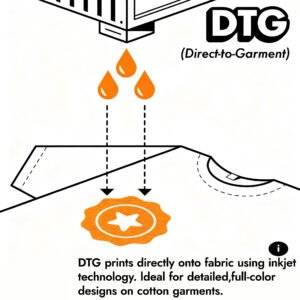
DTG is a digital printing process commonly used in the production of custom garments. It is a direct printing method. Unlike techniques such as dye-sublimation and screen printing, which require creating a design before transferring it to the fabric via heat or pressure, DTG uses a digital inkjet printer to print directly onto the fabric.
Key Advantages
- No complex plate-making process is needed, making it ideal for fast production of small-batch, personalized orders.
- Offers optimal compatibility with 100% cotton fabrics, meeting the demand for personalized cotton printing.
Major Limitations
- Printing speed is far slower than sublimation, resulting in low efficiency for large-scale production.
- High cost per print, with no significant cost advantage for bulk orders.
- White ink is both expensive and unstable, often causing issues like printhead clogs and uneven color.
- Poor wash fastness and durability; prints tend to fade or blur after repeated washes.
- Limited printing area (restricted by the printer’s printhead stroke), preventing full-width printing on large surfaces and limiting application scenarios.
The Brutal Head-to-Head Comparison (2025 Data)
2025 Printing Technology Comparison Chart
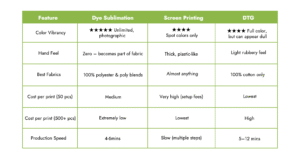
What This Comparison Means for Your Business
- Dye-Sublimation Printing: Delivers unlimited color options, high-speed production, no MOQ restrictions, and the longest-lasting quality. It is the optimal solution for balancing personalization and large-scale production.
- Screen Printing: Retains value only for large-batch orders of simple graphics but is at a clear disadvantage in terms of cost and quality for multi-color or complex designs.
- DTG Printing: Remains appealing for small-batch cotton orders, but core issues like slow production speed and poor print durability have not been resolved in 2025, limiting its application scope.
Three Game-Changing Breakthroughs Making Sublimation Unbeatable in 2025
1. The “Impossible Triangle” — Now Achievable
Dye-sublimation is the only technology that simultaneously delivers:
- Photo-realistic design precision
- Zero hand feel
- Lifelong durability
Neither screen printing nor DTG can achieve all three — especially in large-scale production. Screen printing cannot avoid texture issues due to surface-adhered ink layers, while DTG struggles with durability limitations caused by weak ink adhesion.
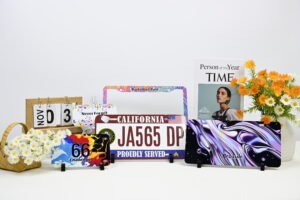
2. 2025 New Breakthrough
Innovation in next-generation sublimation inks and films has made white sublimation blanks a reality. This breakthrough brings three key improvements:
- Over 95% opacity on dark surfaces, eliminating the problem of dull colors when printing on dark materials.
- Significantly enhanced color reproduction, resulting in brighter, more saturated prints that closely match the original design.
- Expanded product categories for sublimation, extending from traditional light-colored polyester products to dark materials and irregularly shaped items.
This single innovation is driving a large-scale shift from DTG to sublimation in the apparel and gift manufacturing industries.
3. Polyester Dominates Fashion & Merchandising
Global brands are accelerating their shift to polyester, thanks to its inherent advantages in durability and color retention, as well as significant improvements in sustainability in recent years.
Where polyester goes, dye-sublimation becomes the first-choice printing solution — leading to explosive growth in market demand for sublimation technology.
Your 2025 Sublimation Winning Setup (Shopping List)
Whether you’re upgrading a current print shop or launching a new one, this is the proven equipment stack for long-term success:
1. Sublimation Printer
EPSON 7380,EPSON 4880C
2. Premium Sublimation Ink
Prosub—–SubliNova
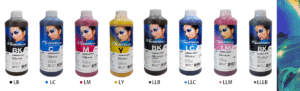
23% wider color gamut compared to generic inks
Stable color output, deeper blacks, smoother gradients
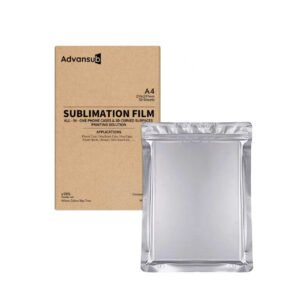
3. Sublimation Film
Prosub—–Advansub
Maximum color release
Ideal for textiles and hard blanks
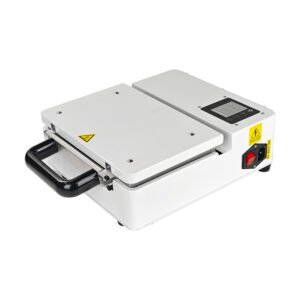
4. Sublimation machine
Flat heat press machine
3D Vacuum machine (for phone cases, curved items, bulk production)
5. Large Range of Polyester Blanks
All blanks are available for purchase via the official channel:https://www.prosub-sublimation.com/
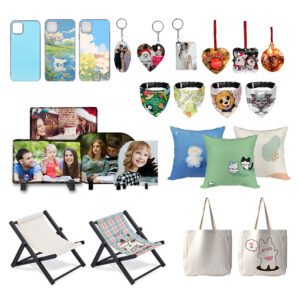
Covers polyester blanks in categories such as apparel, accessories, home goods, and digital peripherals. One-stop purchasing ensures compatibility between blanks, sublimation machine, and inks, simplifying production planning and improving efficiency.
Conclusion
In 2025, there is no longer a debate: If you want photographic full color, zero hand feel, lifetime durability, and actual profit, there is only one printing method left: dye sublimation.
Screen printing and DTG are not competitors anymore. Everyone who’s actually making money has already gone all-in on sublimation, slashed their cost per print to the floor, and scaled their margins to the ceiling.
Stop overthinking. Stop waiting. Start your sublimation journey today, and tomorrow you’ll thank yourself.
The future belongs to those who move first. Your move.